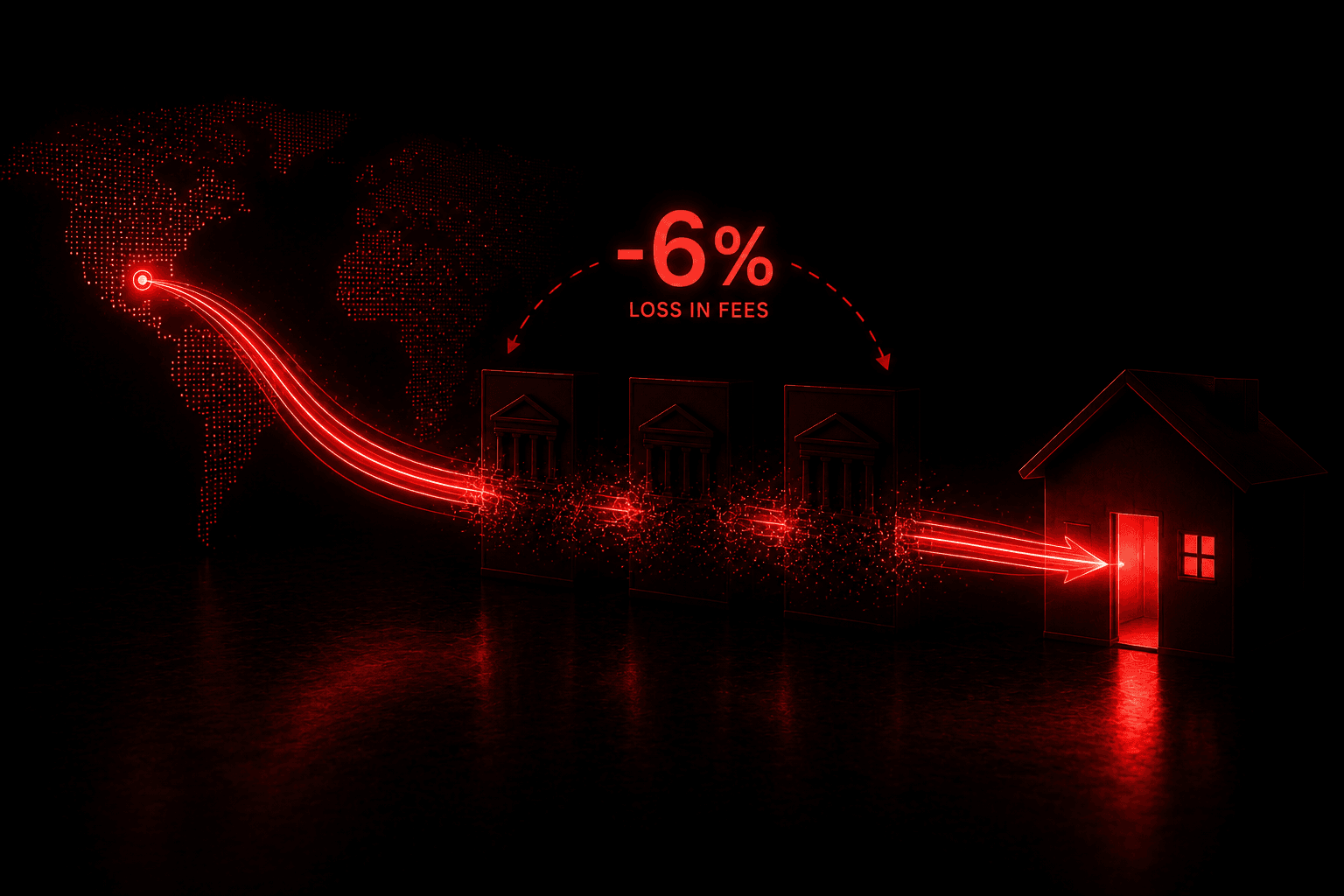
AI agents are starting to act without a person in the loop. They book travel, call paid APIs, buy compute by the minute, and pay for data as they consume it. The models can already make these decisions. Paying for them is the part that breaks.
The rails assume a human
Every payment rail in common use assumes a person. A card transaction is built around a cardholder who approves a charge, disputes it later, and sits inside a chargeback window. Checkout and login flows expect someone to click. Subscriptions bill on a monthly cycle because that is how a person budgets. Hand those systems to software that transacts hundreds of times an hour, at values of a fraction of a cent, and they stop working. The fees alone make small machine payments uneconomical, and the human-approval step removes the autonomy that was the point.
So agents work around it. They share a person's card, run inside a company account with a spending cap, or batch their activity into a monthly invoice someone reviews after the fact. Each workaround puts a human back into a loop the agent was meant to remove. And none of them handles the case that matters most: one program paying another, directly, for a small amount, with both sides certain the payment has settled.
What machine payments need
Payments have to be economical at small values. If an agent pays per API call or per second of compute, the cost of the payment itself has to stay well under the value being exchanged. Predictable cost matters as much as low cost, because an agent making thousands of decisions can't price its actions if the fee shifts unpredictably beneath it.
Settlement has to be fast and machine-readable. An agent needs to know when a payment is safe to act on, and it needs to make that judgment itself. A coffee-sized payment and a large transfer shouldn't require the same wait, and the agent should be able to choose how much confirmation a given action needs.
The logic has to be programmable and verifiable without a shared execution environment that every participant pays to run. And the security has to outlast the hardware, because autonomous payment infrastructure is meant to run for years, and the cryptography protecting it has to hold as computing changes.
How eCurrency's design fits
eCurrency was built as a payment chain, and these are the properties it was designed around, before agents were the reason anyone asked for them.
Blocks are produced every 10 seconds, and confirmation confidence builds as blocks stack on top. An agent can treat a first confirmation as enough for a low-value action and wait for more depth on anything larger, choosing a threshold that matches the value at risk. The party accepting the payment makes that call, just as retail and banking do today.
The chain uses a UTXO model, where every unit of ECR is a discrete, independently verifiable output rather than a line in a global balance. A machine confirming it was paid only has to check the specific output that pays it. It doesn't recompute a shared account state, which suits software that has to verify payments quickly and on its own.
Smart contract logic runs client-side. The parties execute the contract off-chain, and the network checks that the resulting transaction meets protocol rules: signatures are valid, assets are unspent. It never runs the contract code itself. There is no shared virtual machine that every transaction has to run through, and the on-chain surface an attacker can reach stays small. For an agent running its own conditional logic, that keeps execution cheap and the settlement layer simple.
The security has to last. eCurrency supports Falcon at the base layer alongside classical signing, the lattice-based scheme NIST selected in its post-quantum standardisation process. A payment network that machines will rely on for years can't be tied to cryptography a future quantum computer could break, and that protection is available at the base layer today, not something added later.
The supply is fixed with zero inflation. Validators earn a direct share of transaction fees plus a subsidy from the network's Reward Fund, so income comes from network usage, not new issuance. An agent pricing its actions over months has a settlement asset whose supply doesn't dilute beneath it.
eCurrency doesn't run the agents or hold their logic. It settles what they owe each other. The internet economy has been missing a payment layer for machine-to-machine value for as long as the machines have existed, and the tools people reached for instead (advertising, subscriptions, and card rails) were shaped by that absence.
Bitcoin showed that value could move without an intermediary approving it. The internet economy needs that same property at a different scale: small payments, made constantly, between programs, settled in seconds. That is the gap eCurrency was built for, and autonomous agents are about to make it impossible to ignore.