Publishers bundle subscriptions because they can't charge per article. Platforms lean on advertising because direct payment isn't practical at that scale. Software pricing defaults to flat tiers because per-call metering doesn't pencil out. Every workaround exists because the infrastructure couldn't do what the economy actually needed.
That is changing.
What programmable payments mean
The phrase gets used loosely, so it's worth being precise. A traditional payment is a discrete event: someone authorizes a transfer, it goes through a processor, it settles. The payment logic (when to pay, how much, under what conditions) lives outside the payment system, in whatever software manages the transaction. The infrastructure just moves money when it's told to.
Programmable payments work differently. The conditions, logic, and rules live in the payment itself: a payment can be contingent on an outcome, split automatically between recipients, stream continuously instead of moving in discrete chunks, trigger from software without a human in the loop, or settle machine to machine with no intermediary.
This opens up categories of economic activity that are currently impossible, or only viable with heavy workaround engineering. The business models that depend on it are the ones the internet has been trying to build for thirty years.
The scale of what is waiting
Digital payments already move enormous value. Statista projects the digital payments market will reach $37 trillion in 2026, growing to roughly $46 trillion by 2031. That number is large, but it mostly describes payments that already exist: card transactions, digital wallets, mobile POS.
The more interesting number is harder to measure: the economic activity that doesn't happen at all because the payment infrastructure can't support it.
Content micropayments are the obvious example, a model publishing has been trying to make work since the 1990s, consistently blocked by the economics of per-transaction fees. The same constraint shows up everywhere. Developer APIs default to coarse pricing tiers because metering every call isn't economically viable. Compute providers round up to the nearest second because per-millisecond billing isn't practical. And subscription bundles remain the norm in media because per-view pricing doesn't work at today's fee structures.
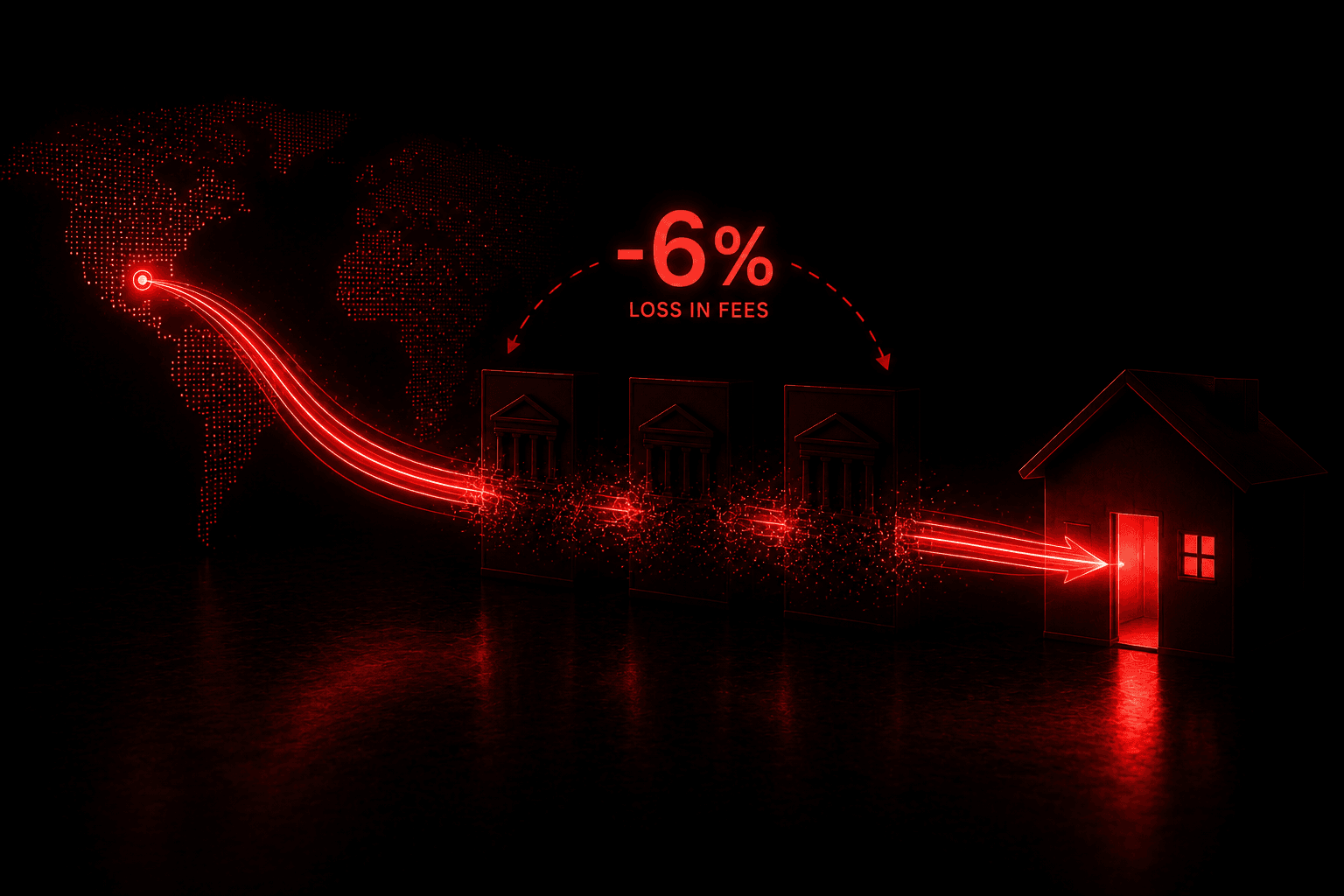
Cross-border payments show how much friction the existing system creates. The average cost of sending $200 internationally was 6.2% in 2023, more than double the UN's target of 3%. For a $200 transfer, that's $12.40 gone before the recipient sees a penny. That friction doesn't just cost money. It shapes which economic relationships are viable across borders and which aren't.
The infrastructure requirements this creates
Programmable payments aren't a single feature. They're a set of capabilities that has to be built into infrastructure from the ground up.
Fees need to be predictable and low enough that sub-cent transactions make sense. Gas auction models, where fees spike with demand, rule themselves out. Payment infrastructure that gets expensive at peak load fails exactly when it's needed most.
Settlement needs to be fast and deterministic. Streaming payments, where value flows continuously per second of compute or bandwidth or media consumed, only work if the settlement layer can keep pace. Variable confirmation times make streaming economically unreliable.
Payment logic needs to live in software, not in separate middleware. Machine-to-machine transactions, automated revenue distribution, conditional payments: these need payment logic that developers can build directly into applications, without routing through a third-party processor on every call.
And the infrastructure needs to hold over long time horizons: cryptographic assumptions, economic models, and validator incentives all need to work not just today but over decades.
How eCurrency's design maps to these requirements
eCurrency was built around these requirements from the start.
The UTXO model moves value atomically without touching shared global state the way account-based systems do. Each transaction settles independently, which keeps the system from slowing down as activity increases.
eCurrency's fee model is deterministic rather than auction-based. Block fees split between a direct payment to the validator and a subsidy from the Reward Fund, which is capitalized by migration fees and a routed share of transaction fees. That fund gives the network a buffer during low-fee periods, so costs stay low and predictable without the price spikes of a gas auction.
Validator income comes from that same structure: a direct share of block fees plus the Reward Fund subsidy. It's stable and tied to network usage rather than new issuance, which means security funding grows as the network grows.
For more complex payment logic (conditional transfers, revenue distribution, automated payment schedules), the client-side smart contract model moves execution off-chain to the application layer, while the chain itself acts as a commitment and settlement-anchor layer. The network verifies outcomes rather than running the logic that produced them.
Staking works without capital lockups. Validators use the ECR they already hold, with no separate bonding step and no slashing penalty built into the protocol. Security comes from economic ownership, which keeps the validator set decentralized and accessible to smaller operators.
What this makes possible in practice
When the infrastructure works, the use cases stop being theoretical.
A content platform can charge per article at fractions of a penny. The economics work because the per-transaction cost is near zero and fees don't spike under load. A journalist gets paid directly for every read, without an ad platform sitting in between.
A compute provider can bill by the millisecond, a media platform can charge by the second of consumption, and an API can price per call: models that have been waiting for infrastructure that can execute them reliably at scale.
Machine-to-machine payments become viable without intermediaries: a device pays for network access, an autonomous service compensates a compute provider, distributed systems settle for data in real time, all with payment logic built into the software itself.
Cross-border transfers settle in seconds at a fraction of the current cost, without a correspondent banking chain, a multi-day settlement window, or a fee structure that eats a meaningful share of small transfers. These are the payment models that couldn't exist until the infrastructure was ready for them.
Why the moment is now
McKinsey's 2025 Global Payments Report names programmable liquidity and agentic commerce among the major forces reshaping the payments landscape: payments initiated and managed autonomously by AI systems. These aren't distant trends. They're already appearing in production systems.
AI agents making purchasing decisions, automated systems settling infrastructure costs, software paying for the compute it consumes in real time: all of this is moving from experiment to deployment. The question is which infrastructure it runs on.
A network built around payment requirements from the start (predictable fees, high throughput, no capital lockups, sustainable economics, long-term cryptographic security) handles these use cases differently than a general-purpose smart contract platform adapted for payments after the fact.
The decisions being made now about which infrastructure to build on will shape what's possible for the next decade.
eCurrency was designed around these requirements from the start. What gets built on it from here is the more interesting question.